
DeKalb County District Court Records
DeKalb County District Court is a lower trial court within Alabama's unified court system. The local District Court page cites Alabama Code Sections 12-12-30 and 12-12-32 for civil and criminal jurisdiction. District Court handles civil actions not exceeding $20,000, including unlawful detainer matters, but it does not cover many equitable or declaratory actions. District Court also handles misdemeanors except municipal-court prosecutions, misdemeanor charges tied to felony cases, and misdemeanors indicted by a grand jury.
District Court may hold preliminary hearings in felony prosecutions and may receive certain non-capital felony guilty pleas under statutory authority. That role makes DeKalb County District Court records important even when a felony later moves into Circuit Court. A criminal case may begin with a District Court hearing, warrant, bond issue, or preliminary setting before the Circuit Court case file becomes the main record.
The official DeKalb District Court page lists the local District Court jurisdiction and judges.
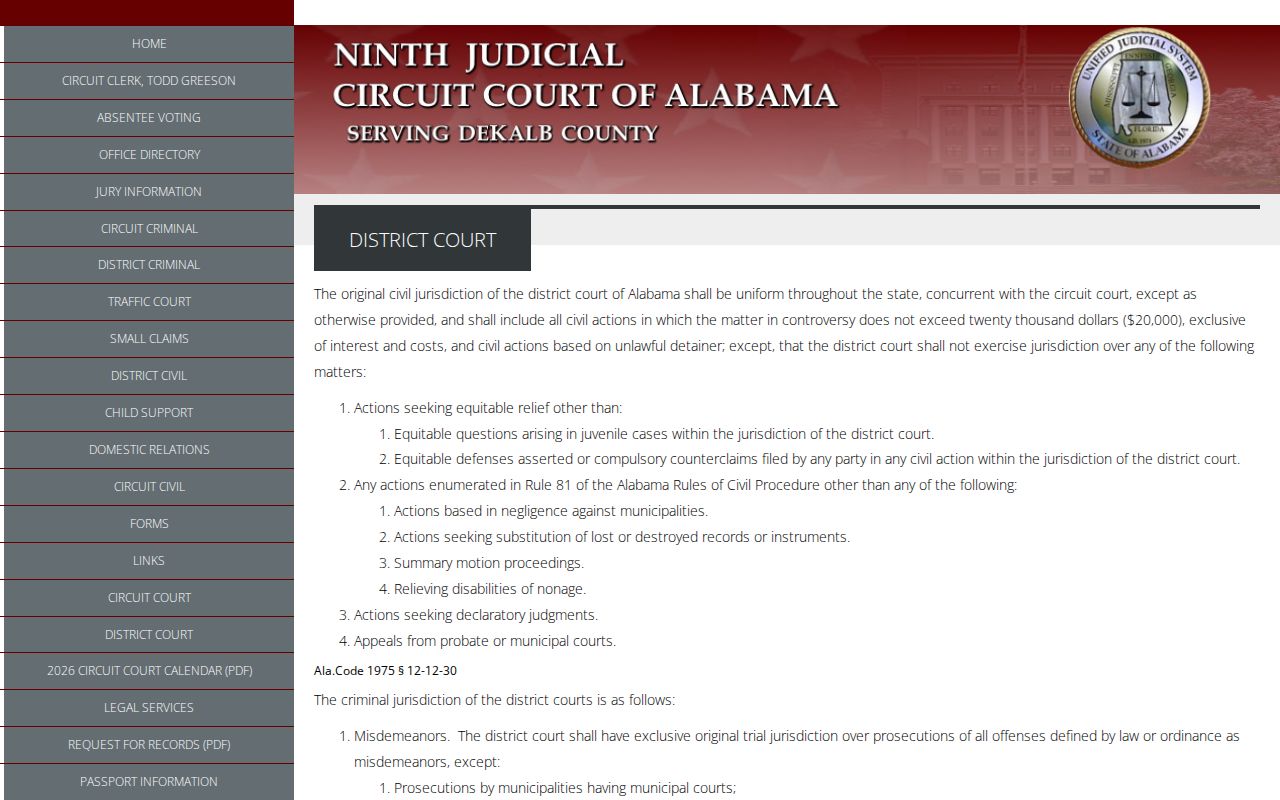
That court page confirms District Court as a distinct DeKalb County record path rather than a substitute for Circuit Court.
DeKalb County District Judges
The research file identifies two DeKalb County District Court judges from the official local court page. Judge Steven L. Whitmire is listed at the county courthouse in Suite 101 with a direct phone number. Judge Jeff McCurdy is also listed at the DeKalb County Courthouse, though the official court page did not locate a separate phone number for that listing.
| Court | Judge | Address | Phone |
|---|---|---|---|
| District Court | Hon. Steven L. Whitmire | County Courthouse, 300 Grand Avenue, Suite 101, Fort Payne, AL 35967 | (256) 845-8574 |
| District Court | Hon. Jeff McCurdy | County Courthouse, 300 Grand Avenue, Fort Payne, AL 35967 | Not located in official court page |
District Court records are still maintained by the Circuit Clerk. For copies, certified records, or older search work, use the Circuit Clerk's record request process rather than contacting a judge's office for record production.
DeKalb District Civil Records
District Civil records in DeKalb County include lower-dollar civil claims, unlawful detainers, evictions, small claims, garnishments, executions, subpoenas, counterclaims, motions, and related orders. The District Civil page names the district civil, small claims, and eviction clerks, and the research file lists Marsha Edwards, Ashley Smith, and Bailee Robles for those record areas. Civil claims from $6,000.01 to $20,000 can fall within District Civil, while small claims are capped at $6,000.
The District Civil fee research includes a filing fee of $322.50 for one-defendant claims from $6,000.01 to $20,000, with additional service fees possible. Small Claims has its own page and fee chart. Appeals from District Court can move to Circuit Court, so a complete case history may involve both District Court and Circuit Court records depending on the stage.
| Record Type | District Court Role | Record Custodian |
|---|---|---|
| District civil case | Civil actions within the statutory limit | Circuit Clerk, District Civil division |
| Small claims | Small claims up to $6,000 | Circuit Clerk, Small Claims division |
| Eviction / unlawful detainer | Possession and related lower civil matters | Circuit Clerk, Evictions division |
| Appeal from District Court | Moves toward Circuit Court when appealed | Circuit Clerk with Circuit Court record path |
DeKalb District Criminal Records
District Criminal records include misdemeanor cases, warrant-related entries, failure-to-appear matters, bond records, and preliminary felony proceedings. District Court criminal jurisdiction excludes municipal-court prosecutions and felony-related misdemeanors that belong with the Circuit Court felony case. That distinction matters when a person has both a municipal ticket and a county criminal case, or when a felony arrest starts in District Court but later becomes a Circuit Court prosecution.
District Criminal clerk contact is routed through the Circuit Clerk's office, with LaKayla Ramza listed for District Criminal. The official District Criminal page also directs copy requests back to the Circuit Clerk records-request form. A DeKalb County District Court criminal search can use Alacourt, but certified copies and record searches that need clerk work still use the local form and fee schedule.
The Alabama expungement statute definition page is relevant when a District Court criminal record may qualify for expungement.
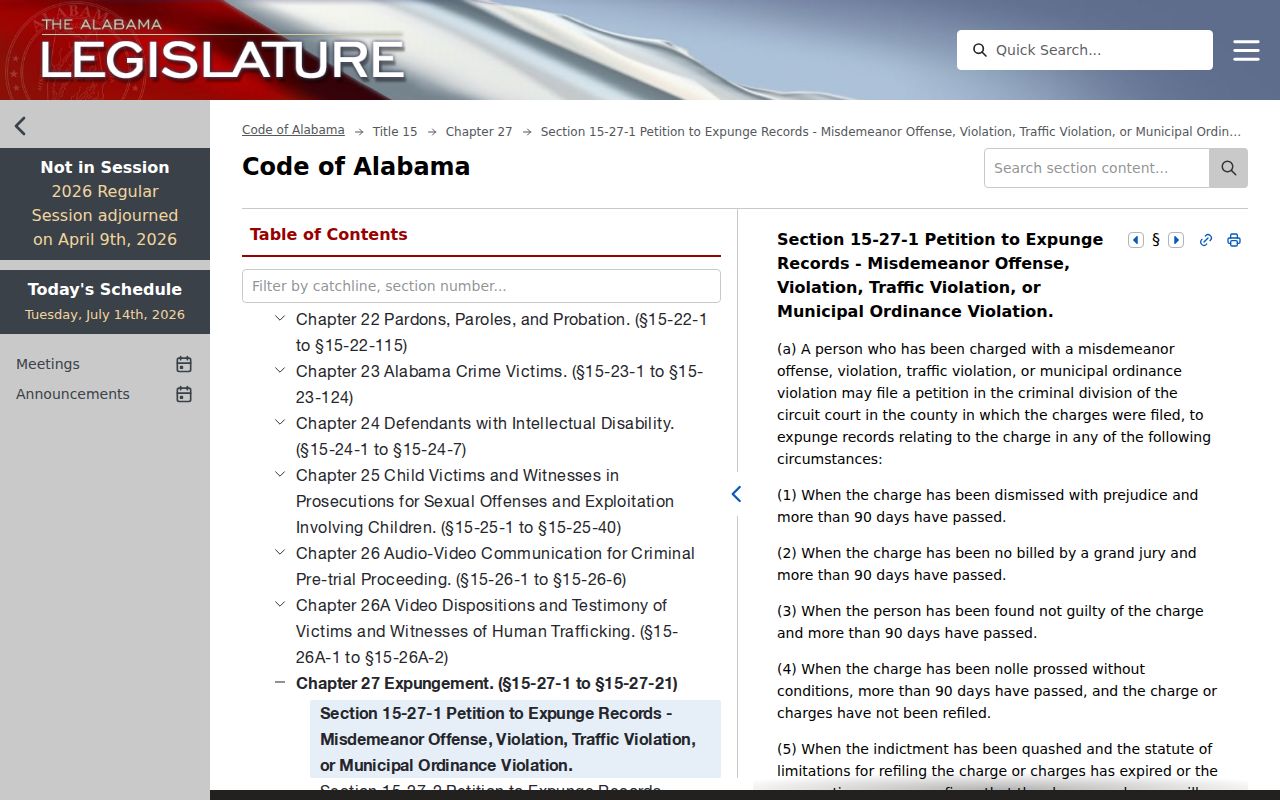
Expungement is not automatic, so a dismissed or old District Court charge should be checked against Alabama's statutory requirements before assuming it can be removed from public access.
DeKalb District Traffic Court
County-level traffic citations in DeKalb County are handled through District Court and the Circuit Clerk's Traffic Court division. Katy Little is listed as Traffic Clerk, with the main number routing to option 1. The local traffic page states that a citation is issued for the person to appear before DeKalb County District Court, but the date on the ticket is not the trial date. To plead not guilty, the person must appear on the court date and request a trial.
Online payment and traffic resolution use the Alabama Traffic Service Center and Resolve. The state traffic information page warns that failure to resolve a ticket before the appearance date, or failure to appear after requesting trial, can result in a warrant and ALEA driver-license suspension notice. Mail payments for eligible county tickets require the guilty plea on the back of the ticket, a money order or cashier's check, and mailing to the District Clerk at P.O. Box 681149, Fort Payne, Alabama 35968. Personal checks are not accepted.
The Alabama Traffic Service Center information page explains Resolve, AlaPay, ALEA points, and the statewide traffic call center.
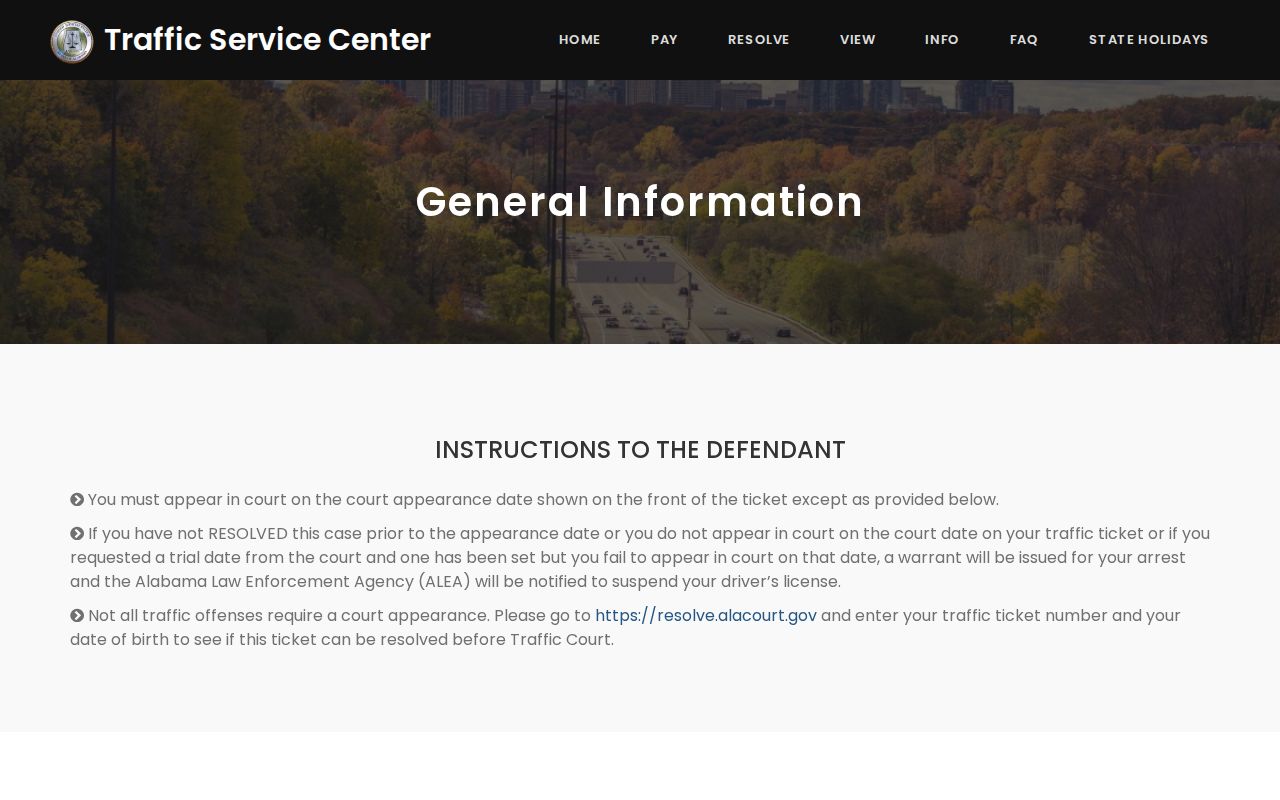
Those state tools supplement the DeKalb District Court record, but they do not replace the court file when a certified copy or case-history entry is needed.
District Court vs Municipal Court
District Court is not the only lower-court record source in DeKalb County. Fort Payne Municipal Court handles Fort Payne Police traffic citations, parking violations, municipal ordinance violations, and misdemeanor criminal arrests initiated by Fort Payne Police. The official city page lists the Municipal Court at City Hall, with court held on Mondays at 4 p.m. in the City Hall courtroom.
That municipal court split prevents one search from covering all local lower-court records. A county traffic citation may route to District Court and AlaPay. A Fort Payne municipal citation may route to the municipal nCourt citation or case-number payment channel. Other municipal police departments may also generate arrests housed in the DeKalb County Jail even when the underlying case is municipal.
| Issue | District Court | Fort Payne Municipal Court |
|---|---|---|
| Traffic source | County-level traffic citations | Fort Payne Police citations |
| Criminal source | County misdemeanors and preliminary felonies | Municipal misdemeanors and ordinance cases |
| Payment channel | AlaPay, Resolve, mail to District Clerk | City payment channels and nCourt citation search |
| Record custodian | DeKalb Circuit Clerk | Fort Payne Municipal Court |
The Fort Payne Municipal Court page documents the city court's location, schedule, payment rules, and municipal jurisdiction.
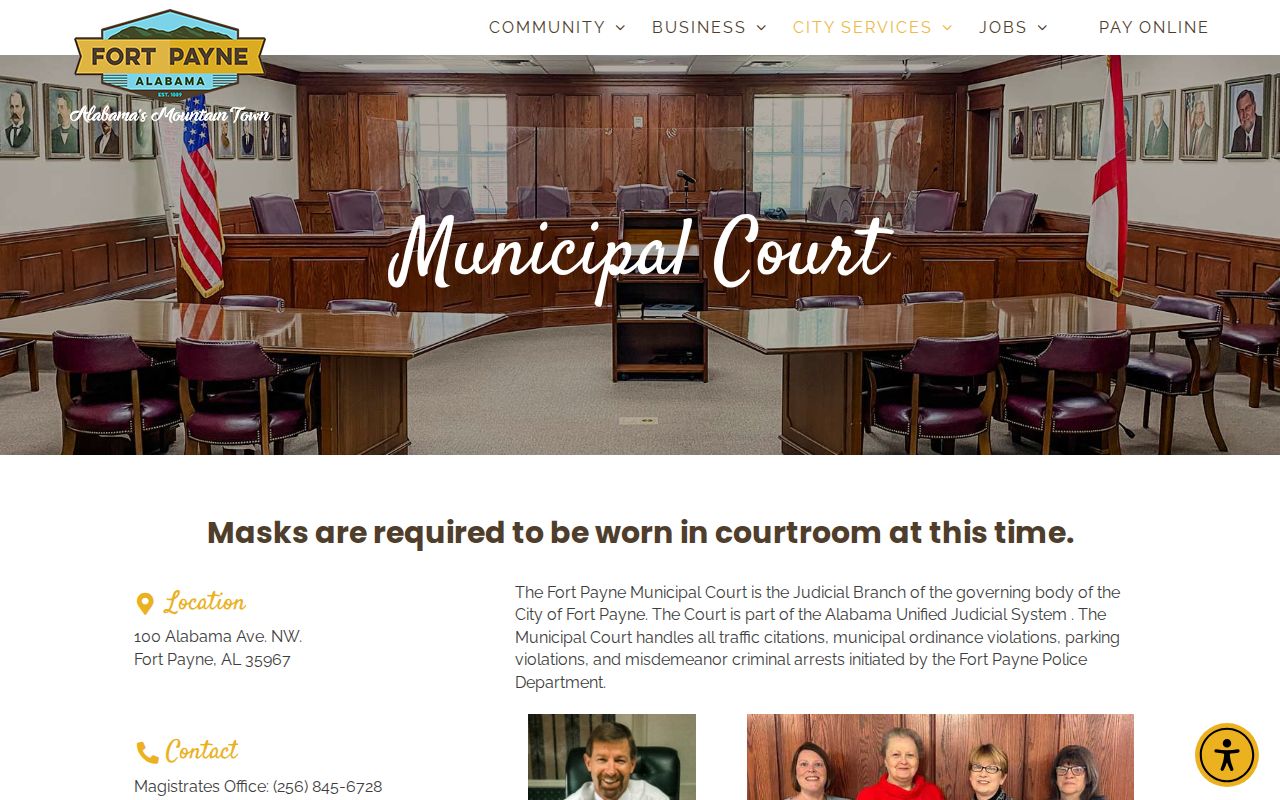
Use that city court source for Fort Payne municipal matters rather than sending those records to the DeKalb Circuit Clerk.
DeKalb District Court Case Flow
District Court records often sit at the first public court stage for DeKalb County misdemeanors, lower civil matters, evictions, small claims, and traffic citations. A civil filing can begin in District Court, move through answer, motion, hearing, judgment, and possible appeal. A criminal matter may begin with a warrant, bond setting, or preliminary hearing, then stay in District Court as a misdemeanor or move toward Circuit Court if it is a felony prosecution.
Criminal flow: Arrest or complaint › District Court first setting or preliminary stage › misdemeanor disposition or felony transfer path › Circuit Court if indicted or otherwise moved › sentencing or appeal.
Civil flow: District civil or small-claims filing › service › answer or default › hearing or trial › judgment › collection process or appeal.
For public access, the practical chain is Alacourt or Just One Look first, then the Circuit Clerk record request form for copies, older records, certification, or searches that need staff review.
Restricted District Court Records
Juvenile records can intersect with lower-court and clerk division work, but they are not searched like ordinary adult District Court records. Alabama Code Section 12-15-133 controls confidentiality of juvenile court records and information. Access may depend on statute, party status, attorney status, agency role, or court order.
The Alabama juvenile confidentiality statute is the controlling public source for that access limit.
Sealed and expunged District Court records can also be withheld from ordinary public search. Personal identifying information, victim data, minor names, financial account information, and medical details may be redacted even when a public case record exists.